The contact lens habits that wreck your eyes.
Most contact-related complications come from a small number of habits — and almost all of them are habits patients knew they shouldn't have.
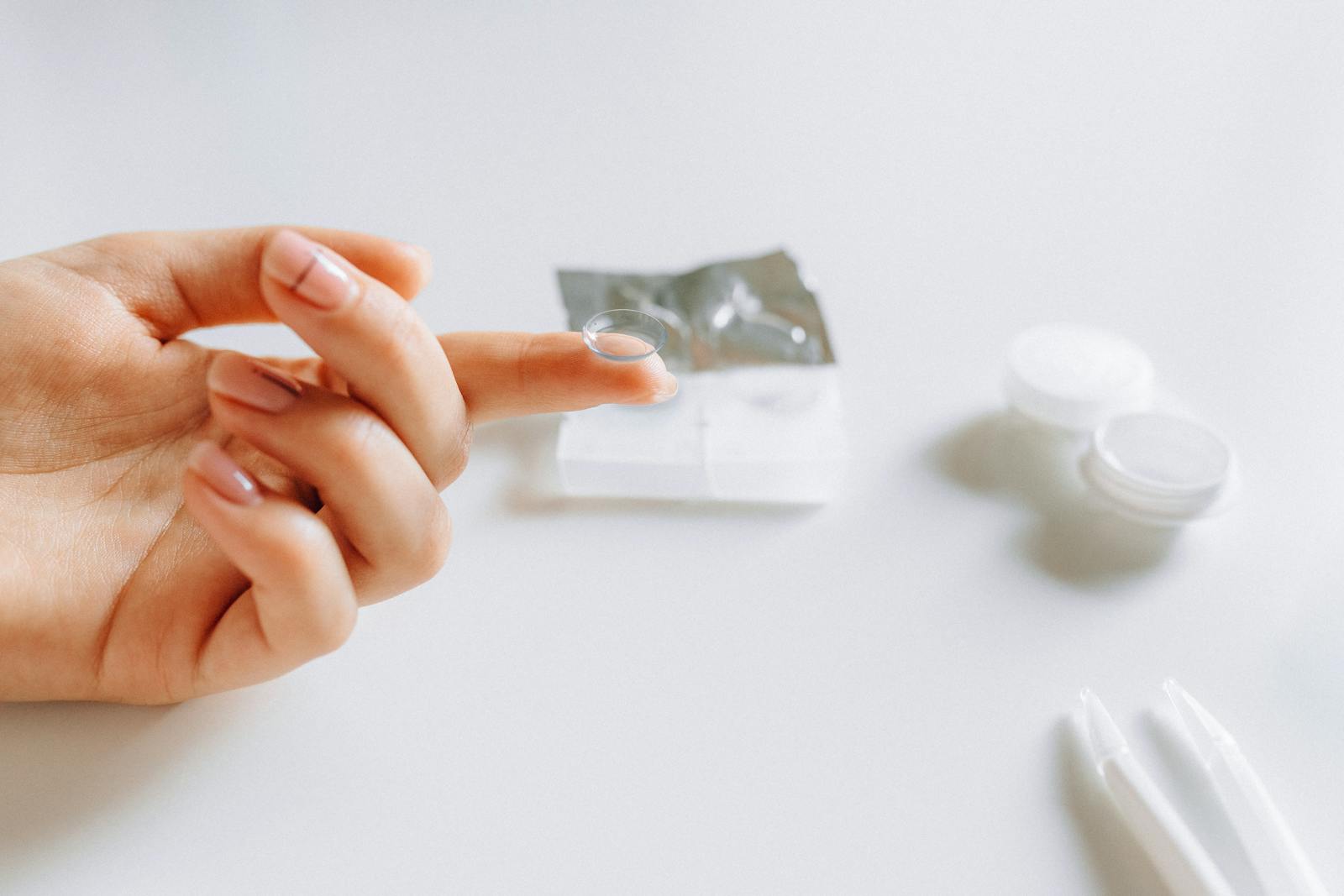
Contact lenses, used correctly, are one of the safest medical devices in widespread daily use. Used incorrectly, they're responsible for the most preventable corneal infections we see — almost always in patients who know better and did the thing anyway.
The biggest mistake.
Sleeping in lenses that are not approved for overnight wear. The risk of microbial keratitis — a sight-threatening corneal infection — multiplies by roughly six to eight times when patients sleep in standard daily lenses. The lens sits on the cornea, cutting off the airflow the eye needs at night, and bacteria flourish in the warm pocket between lens and surface.
"Just this once" is the phrase patients use most often, immediately before the appointment where we treat the resulting ulcer. It is genuinely worth taking lenses out before bed, every night.
Water.
Tap water and contact lenses do not mix. Acanthamoeba, an organism present in tap water, causes one of the most aggressive and treatment-resistant corneal infections in ophthalmology. Don't rinse lenses in tap water. Don't swim with lenses in. Don't shower with lenses in.
This sounds dramatic until you've sat across from a patient who lost vision in one eye from a single shower with contacts in.
Storage and replacement.
Replace your lens case every three months. The case develops biofilm — a thin layer of bacteria — that contact solution alone won't clear. The case is more important than most patients think; we've cultured cases at six months that grew more bacteria than the lenses they were storing.
Two-week lenses worn for three weeks. Monthly lenses worn for two months. These are the most common patterns we see, and they're how most chronic dryness and inflammation in contact wearers actually starts. The replacement schedule on the box is not a marketing suggestion; it's the failure point for the material.
The exam.
Contact lens wearers need a yearly fit-and-health check, even if the prescription hasn't changed. The lens has to fit the curvature of your specific cornea. A lens that fit five years ago may not fit now — corneas change. The exam is short, and the consequences of a poorly-fit lens are slow but accumulating.
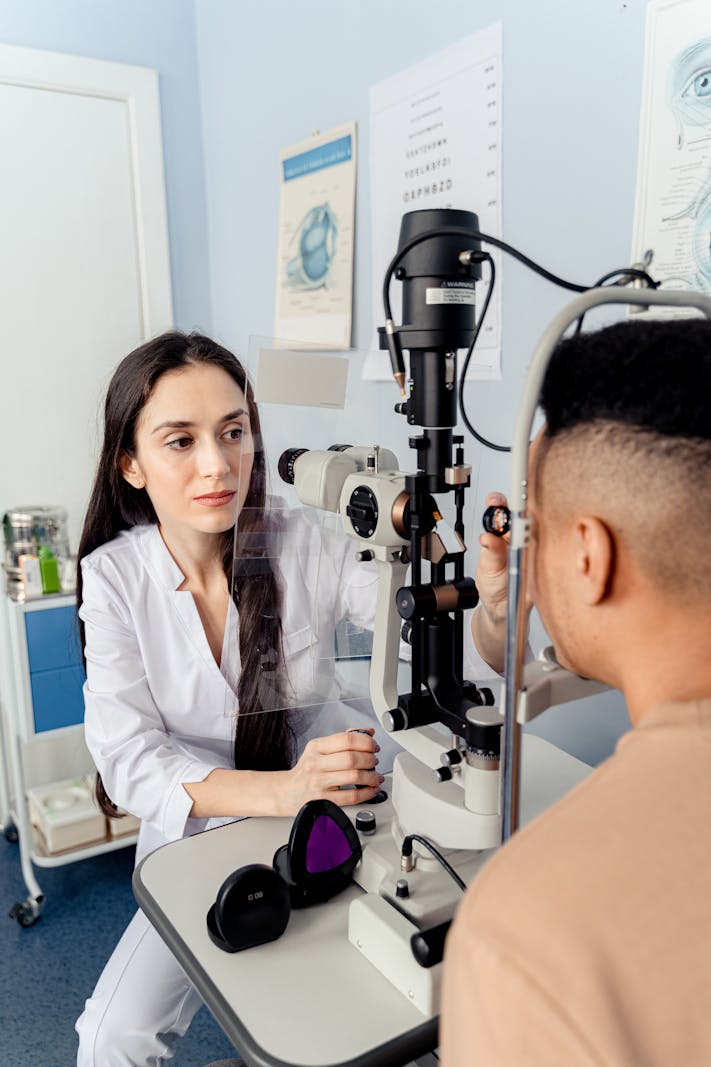
What an eye exam actually looks for.
Beyond the chart on the wall — the quiet checks that catch glaucoma, diabetes, and brain conditions years before symptoms.
Screens, strain, and the 20-20-20 rule.
Why your eyes feel raw after a workday — and the small habits that actually move the needle on digital eye strain.

Cataract surgery, demystified.
What changes when the cloudy lens comes out — recovery timelines, lens choices, and what "clear" looks like a week later.